


The USMC's Craziest Marine Division Structure (1947-49)
Sep 6
3 min read
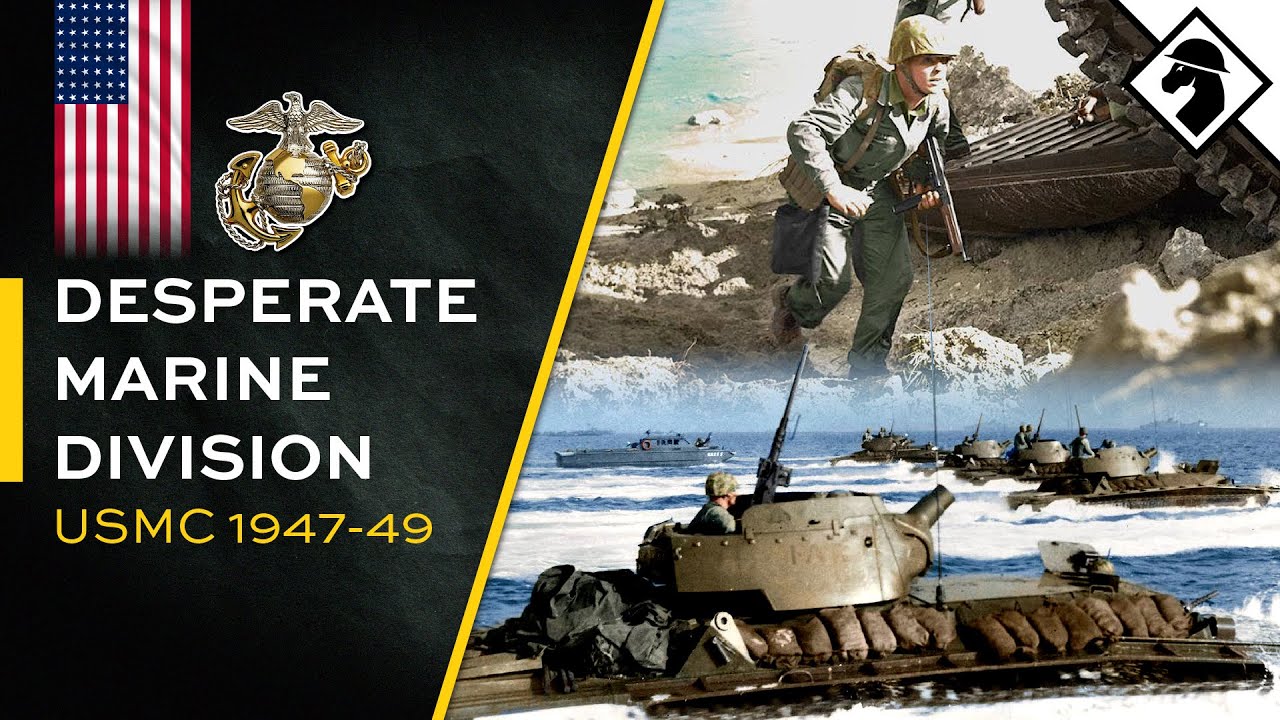
In this Depth Section video I talk about the U.S. Marine Corps short-lived J-series Marine Division that was used from 1947 to 1949. It was an unorthodox organization resulting from the shrinking of the corps post-WW2 and was the first purpose-built peacetime Marine Division (except for the H-series of 1946 that didn't change much). Instead of being based on 2 Infantry Regiments manned at cadre levels (about 50% manning) which would be expandable to 3 Infantry Regiments during wartime (the status quo going into Korea), the J-series division was based on 6 separate Infantry Battalions. It heavily resembled the U.S. Army's Pentomic Infantry Division that came a whole decade later, and at the time they used dispersion on a nuclear battlefield as a tactical justification for the strange organization. This video covers both the theoretical TO&E and task organization options as well as what the divisions actually looked like in practice, as they were authorized more battalions than actually existed in the Marine Corps at the time.
Sources:
[1] "The New FMF" in "Marine Corps Gazette", May 1947, pp. 10-14
[2] Buckner, D. (1981) "A Brief History of the 10th Marines", p. 85; Donnelly, R., Neufeld, G. and Tyson, C. "A Chronology of the United States Marine Corps, 1947-1964, Volume III", p. 3; Frank, B. and Shaw, H. "Victory and Occupation: History of U.S. Marine Corps Operations in World War II, Volume V", p. 23
[3] National Security Act of 1947. "Excerpts of Public Law 253-80th Congress, as amended by Public Law 36-81st Congress and Public Law 216-81st Congress pertaining to the Department of the Navy and the Marine Corps" U.S. Congress
[4] Vandergrift, A. "The Marine Corps in 1948", February 1948 Proceedings Vol. 74/2/540
[5] "Staffing the Peacetime Marine Division" in "Marine Corps Gazette", October 1947, pp. 37-45
[6] Rottman, G. (2004) "US Marine Corps Pacific Theater of Operations 1944-45", p. 13; https://npshistory.com/publications/wapa/npswapa/extContent/usmc/pcn-190-003135-00/sec2.htm
[7] Sayen, John. (2001) “Battalion: An Organizational Study of the United States Infantry.” Working paper, Marine Corps Combat Development Command., p. 174.
[8] Condit, K. and Turnbladh, E. (1960) "Hold High The Torch: A History of the 4th Marines", p. 357
[9] Santelli, J. (1970) "A Brief History of the 4th Marines", p. 37
[10] Donnelly, Neufeld and Tyson (1971), p. 4
[12] Yingling, James. (1968) "A Brief History of the 5th Marines", p. 41
[13] Strobridge, T. (1967) "A Brief History of the 9th Marines", p. 13
[14] Kane, Robert. (1970) "A Brief History of the 2d Marines", p. 57
[15] Jones, William. (1987) "A Brief History of the 6th Marines", p. 124
[16] U.S. Marine Corps Lineage and Honors Certificates for "4th Marines" and "8th Marines"
[17] Strobridge (1967), pp. 16-17; U.S. Marine Corps Lineage and Honors Certificates for "1st Marines" and "3d Marines"
[18] Buckner (1981), p. 87
[19] Emmet, R. (1968) "A Brief History of the 11th Marines", p. 29
[20] T/O E-100 and F-100, Marine Division
[21] U.S. Marine Corps Lineage and Honors Certificate for "Combat Logistics Regiment 1"
[22] Giusti, E. (1967) "Mobilization of the Marine Corps Reserve in the Korean Conflict, 1950-1951", pp. 4-5
[23] Sayen, p. 178
[24] Rottman, p. 17
[25] S.677 - An Act to fix the personnel strength of the United States Marine Corps, and to establish the relationship of the Commandant of the Marine Corps to the Joint Chiefs of Staff, 82nd Congress (1951-1952)






Comments